What self-custody actually means for a crypto wallet
Custody is not a setting you toggle. It is a question of who can move your assets, what happens when a device is lost, and which failure modes you are accepting.
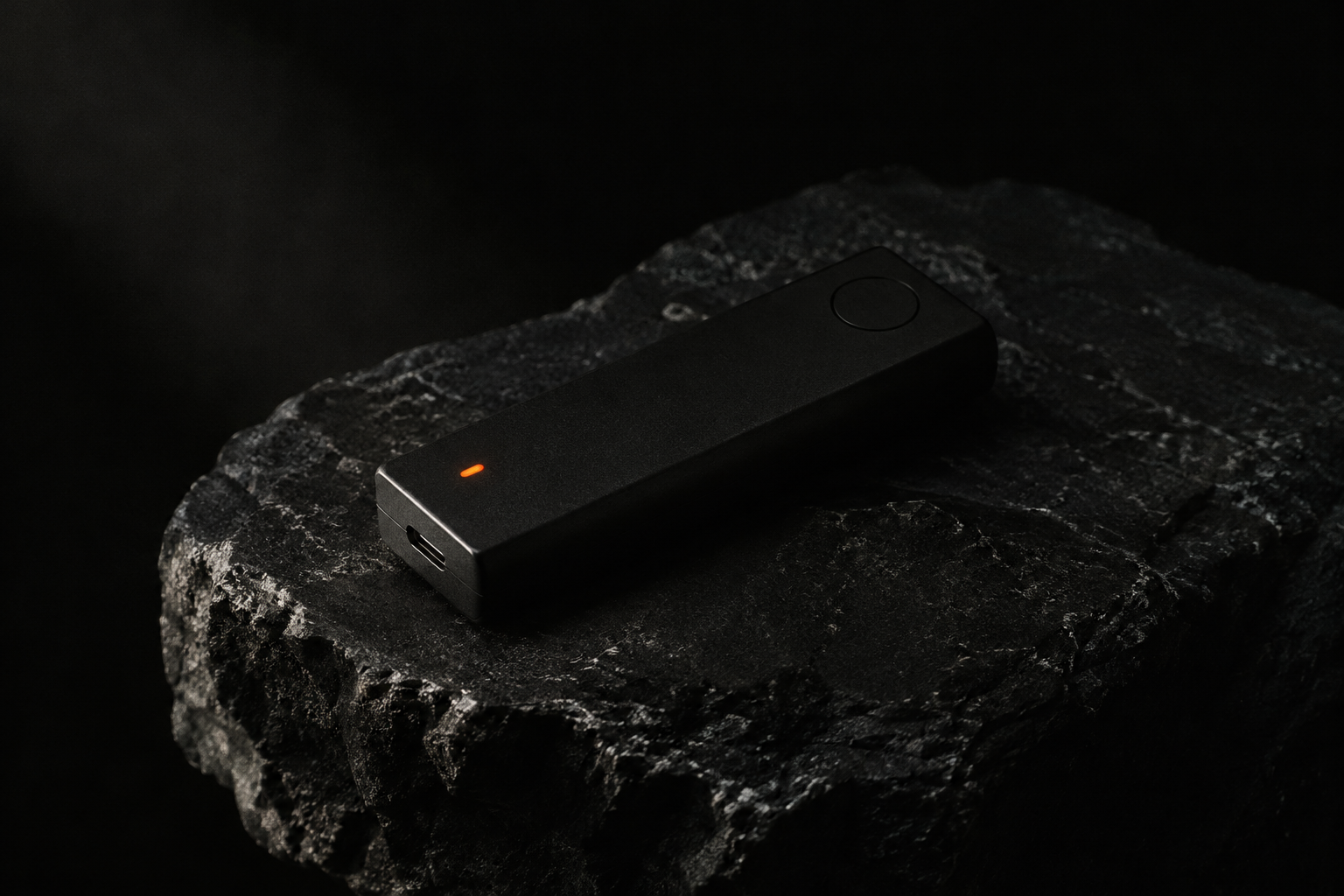
The phrase "not your keys, not your coins" is repeated so often that it stops meaning anything. In practice, self-custody is a specific arrangement: a secret exists on hardware you control, and every transfer requires that secret. Everything else, including the app you use, is convenience layered on top.
Key takeaways
- The recovery phrase, not the app, is the account.
- Self-custody trades platform risk for operational risk you control.
- Split balances by purpose and rehearse recovery before you need it.
Where the account actually lives
When you open an account at a bank or an exchange, the balance is a row in someone else’s database. You have a claim, and the operator decides whether a transfer is allowed. With a self-custody wallet, there is no row: the blockchain holds the balance, and a private key proves you may move it.
The wallet app is a signer and a viewer. Delete it and your assets do not move. Copy it to another device with the same recovery phrase and the same assets appear. That is the practical test of custody: the phrase, not the app, is the account.
What you gain
The obvious gain is that no company can freeze, restrict or lose your balance. That matters most in places and moments where access to a service is uncertain.
The second gain is composability. A self-custody wallet can sign for any contract on a supported chain, which is what makes staking, lending and swapping without an intermediary possible.
- No account approval, no withdrawal limits, no platform insolvency risk.
- Direct access to on-chain apps and networks.
- Portability: one recovery phrase works across wallets that follow the same standard.
What you take on
Self-custody moves the operational risk to you. There is no support line that can reverse a transfer, and no fraud department that can restore a stolen balance. If the phrase is lost, the assets are unreachable forever; if it is exposed, they can be taken in a single block.
That trade is not for every balance and not for every person. Many experienced holders deliberately split: a small self-custody wallet for active use, a hardware-backed wallet for savings, and a regulated exchange account for the portion they may need to convert to cash quickly.
The three failures worth designing against
Almost every real-world loss falls into one of three buckets, and each has a cheap mitigation.
- Loss: the phrase exists only in memory or on one fragile sheet of paper. Fix it with two offline copies in separate locations.
- Exposure: the phrase was typed into a website, stored in cloud notes or captured by malware. Fix it by never digitising it and by signing only decoded transactions.
- Mistake: funds sent to a wrong chain or address. Fix it with small test transfers, saved contacts and a separate account for daily activity.
How custody changes the threat model
With a custodial service, the main risks are the operator: insolvency, freezes, account takeover through support desks. With self-custody, the main risks are local: device compromise, phishing signatures and backup mistakes. The attacks change shape, so the defences must change too.
That is why a modern wallet spends more effort on what happens before you sign than on the sign button. Simulation, decoded transaction details, approval warnings and address checksums all reduce the chance that a single rushed tap becomes permanent.
A practical custody setup
A setup that works for most people has three layers. A daily wallet on your phone with a modest balance. A savings account protected by a hardware signer. A documented recovery plan, written down and stored with the phrase, describing which device you would restore on and which accounts to revoke.
Test the recovery plan before you need it. Restore an empty test wallet from a phrase once, end to end, and the process stops being theoretical. Self-custody is not a promise that nothing goes wrong; it is a promise that recovery does not depend on someone else deciding to help.
/ Next step
Put this into practice in Meteor Wallet
Fourteen chains, decoded transactions and swaps with every fee visible before you sign. Start with the setup guide, or compare features first.